

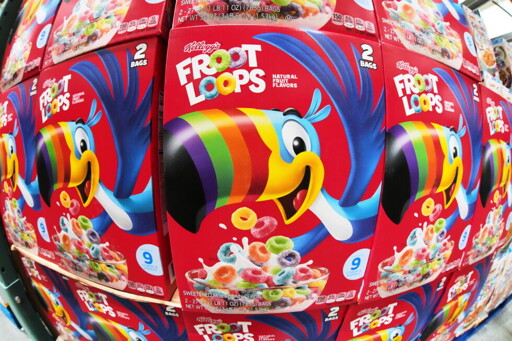
WK Kellogg said Thursday that it will remove artificial colors from all its cereals by the end of this year.
The change comes a year ahead of schedule. Kellogg said last August that it would remove synthetic dyes from its cereals by the end of 2027.
But the company said Thursday it has identified fruit- and vegetable-based juices that will give cereals like Froot Loops and Apple Jacks their distinctive colors. The Battle Creek, Michigan-based company said it has also invested in equipment that will allow it to transition to natural colors.
Removed by mod
Do you have a source for this? As someone with a young child, I’ve gone out of my way to research and avoid artificial dyes, and cancer literally never showed on my radar
They’re wrong. Please see my comment. There are potential other problems with dyes (the main one that’s more concerning is risk of ADHD), but their statement about cancer is horseshit – not because it’s impossible they cause cancer but because “directly linked and have been for years” is not supported by science in 2026.
Good for you for looking out for your kid. ❤️
Removed by mod
Yes, because it’s a single study on rats from the 1990s. When we’re talking about the health effects in humans and you show up talking about a “direct link to cancer”, any reasonable reader – because again, “humans aren’t rats” – would believe you’re talking about a direct link to cancer in humans.
“Alcohol has been directly linked to literally being dissolved alive.”
“Really?”
“Well in bacteria, yes.”
Removed by mod
Genuine question: Is it directly linked to cancer to a serious degree or in the same way that everything is technically linked to cancer?
Just to put into perspective the sun is considered a class 1 carcinogen.
Yes, this is why it can cause skin cancer and that sunscreen and sunhats exists.
One of these things is needed for life and the other is shit they add to food to make it look pretty.
Removed by mod
Gonna need a research paper cite on that one.
What they weren’t telling you is that it’s one study from the 1990s in rats, then in another comment they just throw in “granted it’s in rats” like that doesn’t make all the difference in the world.
Removed by mod
This is misinformation. The evidence is so tenuous that the link may as well not exist. Other problems perhaps, but not this one – at least it’s certainly not well-studied enough to go throwing around “directly linked to cancer and have been for years.”
Please have some level of compunction about throwing serious medical claims around.
Removed by mod
You know, generally it’s implied you mean “in humans” when we’re talking about… the health effects in humans.
“People aren’t rats”, to quote a “no-fucking-shit” passage from the article that I hope is obvious to you too.