The latest surge in fossil-fuel prices means it is now up to nine times cheaper in the UK to drive an electric vehicle (EV) than a petrol or diesel car, shows Carbon Brief analysis.
By “nine times cheaper,” they mean the fuel for the EV can cost as little as 1/9th as much as the fuel for a gasoline / petrol car.
That’s great, as far as it goes, but depreciation per mile is usually a bigger cost than fuel. Other costs like registration taxes, insurance, and maintenance shouldn’t be expected to follow this 1/9th pattern either, of course. You’re not going to switch to an EV and find your total expense drops to 1/9th.
It feels to me like they’re telling an incomplete story on purpose.
Where did you get this idea? EV’s go through brakes and tires faster than their ICE equivalents because of the extra vehicle weight.
Oh my, I think you just showed your hand about lack your of experience on the topic.
EVs (and many hybrids for that matter) use the brake pads significantly less than ICE vehicles because most of the braking energy is recovered from regen. I had a Prius for 9 years and sold it with the original factory brake pads still on it, with likely another 4-5 years of life on them.
My EV’s brake pads are still at 95% life even with the car being 4 years old.
Regardless, taxes and insurance are roughly the same. Maintenance on an EV is FAR less than an ICE car (no oil changes, fewer brake changes, fewer moving parts to replace over time). So if “fuel” is 1/9, and maintenance is just replacing the tires and putting in new wiper fluid, then driving is going to be much cheaper.
Don’t teslas ship with perelli’s? Those are super soft tires…they grip really well but with the torque those things throw I think they’d last half as long…
I think thats only the “Performance” models. The Standard and Long Range originally came with Pilot Sport 4 or Primacy (which don’t last) and have since been replaced on all new shipping cars a few years ago with Hankook Ventus.
I don’t think they’re actually harder. Stiffer construction perhaps. If the rubber compound itself was harder, you’d be sacrificing grip, which I don’t think you’d want with a heavier vehicle with instant torque up the wazoo.
Quick googling session tells me that, on average, EV tires are a little bit more expensive (~10-20%) due to more exotic compounds used and last a little bit less (also about 10-20%) due to the weight, but they still have fairly soft compounds to retain good grip, which is good news because safety is the last thing you should sacrifice.
At the end of the day, each tire is a compromise, and you simply can’t get similar grip AND better wear AND better efficiency as an existing high-end tire unless you find some truly super exotic compounds, in which case it would have to go up in cost quite a bit.
There are also different compounds for different applications, I very much doubt a Nissan Leaf’s tire is comparable to a Model S P100D so the Leaf may very well have harder tires for better wear and efficiency, but unlike the P100D, you won’t be comparing it to a super soft sporty driving focused ICE tire either, you’d be comparing it with economy tires in an ICE vehicle that will also be somewhat hard.
A large portion of depreciation and insurance is fixed, not based on actually driving.
And maintenance is lower with EVs as well.
Still though, you are right, 1/9 is specific to fuel, and it’s deceiving. If it.were truly 1/9 we wouldn’t be having this conversation because all vehicles would be EVs.
If it.were truly 1/9 we wouldn’t be having this conversation because all vehicles would be EVs.
“Battery-electric vehicles (BEVs) accounted for 97.8% of all new passenger car registrations in Norway through the first eight months of 2026, according to the Norwegian Road Federation (OFV).” source
“New energy vehicles (NEVs)—including pure electric and plug-in hybrid cars—accounted for a record 65.2% of new car sales in mainland China” source
Oh and don’t worry, if ICE vehicles go away, the politicians will find some way to levy an 8/9ths tax on something else to make up for not having those fuel sales.
If you think fuel tax is the majority cost of owning a car, you are going to be disappointed. And why shouldn’t car owners pay to maintain the roads? And how do you think that happens? If it isn’t taxes it will likely be tolls.
We need to figure out how to pay for road upkeep somehow.
That’s not to say the way gas taxes are allocated to road maintenance now is perfect. Far from it. But on paper (at least where I’m from) that’s how roads are maintained.
Depending on the jurisdiction… Gas taxes go towards externalities largely. Roads are funded through general revenue. Perversely, those who don’t drive subsidize drivers.
If I could wave a wand that I dont have:
Gas tax to cover externalities
Tire tax to cover externalities
Toll fees to cover usage.
Reduce income tax and increase social assistance proportionally.
Obviously that would be impossible to sell, but it would be more fair, and incentive better outcomes.
Sales tax makes sense to cover roads because a lot of the wear and tear on the roads is caused by the trucks that deliver goods. Even if you bike to the store, you are using the roads in that way.
Im not disagreeing, it just kinda sucks that im in a VERY low paying with VERY high taxes for our area. In theory that means we should be getting better services. But its quite the opposite.
True. However as has prices rise the ‘savings’ should increase further such that the tax feels smaller compared to the fuel ‘savings’.
The other thing to consider is that high weight vehicles, think tractor trailers, but also EVs to an extent, do significantly more damage to the roads they operate on. I wonder if the proliferation of EVs will increase road wear.
The depreciation of a car is less than the fuel costs. If a car depreciates by $20,000 over 10 years, that is less than $38/week in fuel. If it depreciates by $30,000, that is still only $58/week.
Even at today’s ridiculous fuel prices, 100 km won’t cost me more than about 15€ and that’s because I have an early 3.0 tdi, the ones made just one year after mine would do more like 12€ and smaller engines might be able to stretch 10€. Just talking highway kilometers right now, city kilometers are WAY too variable.
You can get a 60k€ EV with under 100k km on it for 25k€, roughly speaking. That’s over 35€ per 100 km in depreciation if you bought it new and sold after 4-5 years.
Even the currently ~25-30k ones might still have a few more years of rapid depreciation roughly in line with fuel costs I’d wager.
Where the market really gets interesting for the budget-constrained buyer is when actually good EVs are out of battery warranty for good. They should have reached most of their depreciation at that point, people still have a hard time trusting batteries because they’re more expensive to replace than the cars cost (yes, I know you don’t usually have to replace the entire battery and that failures are increasingly uncommon, but the average joe does not). Since actually good EVs outside of Tesla mostly started arriving around 2020-2021, that’s about 2-3 more years at 8 years of battery warranty.
Your 20k over 10 years only applies to cars that are already cheap. Which for EVs means I’d be stuck with an early Tesla model S or a Dacia Spring (actually that one can’t depreciate 20k over 10 years, it doesn’t even cost 20k). My love for turning wrenches and ability to usually repair even the most annoying problems, means that I can comfortably buy super depreciated luxury cars and keep them on the road for cheap. Equivalent comfort in an EV can’t be had in a cheap EV other than, again, a used Tesla S. I test drove an Audi E-tron and I found it lacking compared to what I can buy for just 2k lol
But a few more years and some EVs I like will have depreciated to under 20k, at which point I might as well go for it.
depreciation per mile is usually a bigger cost than fuel.
OK, this might be something that a fleet manager would care about, but the average driver wouldn’t consider in a hundred years. You don’t have to swipe your card and pay for depreciation every four days. Not to mention that depreciation has no bearing on vehicle type and little connection to physical reality at all.
And if anything, EVs maintenance is lower than expectations. There is no robust recycling of EV batteries for instance because it turns out that the batteries last reliably for 30 years and most of the ones produced are still in service. Also EVs are by nature simpler, with many components being solid state. ICE are rube goldberg masterpieces, the result of decades of continuous development.
Depreciation is irrelevant and only brought up by combustion promoters. A car is a tool, not an investment in itself. The only relevant metric is overall yearly cost until the car dies.
Changing cars every few years, which is where depreciation matters, is an expensive luxury no one actually has to play.
Yes, strictly “to drive” (by which I assume they mean fuel only) makes sense. Medium term expenses are a mixed bag, like increased tire wear but no oil changes. Long term is a mixed bag as well, with an eventual battery replacement and depreciation, offset by the long term costs of a ICE drivetrain.
It’s clearly cheaper day to day, and overall cheaper in the long run. But it’s not all roses.
Maintenance is also much lower cost. I’m looking at upgrading the battery on my 2013 leaf. Its at about 90% capacity and it didn’t start with a lot of range. Upgrade is still under 10k.


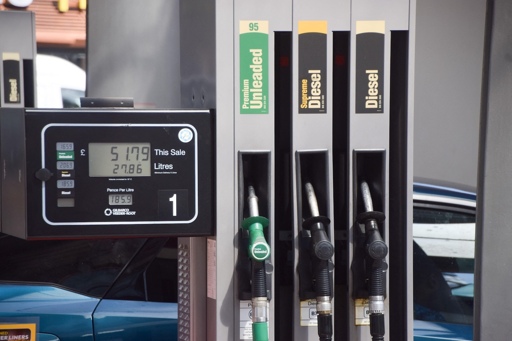
By “nine times cheaper,” they mean the fuel for the EV can cost as little as 1/9th as much as the fuel for a gasoline / petrol car.
That’s great, as far as it goes, but depreciation per mile is usually a bigger cost than fuel. Other costs like registration taxes, insurance, and maintenance shouldn’t be expected to follow this 1/9th pattern either, of course. You’re not going to switch to an EV and find your total expense drops to 1/9th.
It feels to me like they’re telling an incomplete story on purpose.
What’s there to maintain? Even the brakes barely get used.
Where did you get this idea? EV’s go through brakes and tires faster than their ICE equivalents because of the extra vehicle weight.
Oh my, I think you just showed your hand about lack your of experience on the topic.
EVs (and many hybrids for that matter) use the brake pads significantly less than ICE vehicles because most of the braking energy is recovered from regen. I had a Prius for 9 years and sold it with the original factory brake pads still on it, with likely another 4-5 years of life on them.
My EV’s brake pads are still at 95% life even with the car being 4 years old.
It says “cheaper to drive” not “cheaper to own.”
Regardless, taxes and insurance are roughly the same. Maintenance on an EV is FAR less than an ICE car (no oil changes, fewer brake changes, fewer moving parts to replace over time). So if “fuel” is 1/9, and maintenance is just replacing the tires and putting in new wiper fluid, then driving is going to be much cheaper.
Tire changes would be more expensive and more frequent since EV heavier
In the UK the sorry state of the roads will be more of a problem for tyres than extra weight.
At the same time, EVs tend to use harder tires (for better efficiency) that don’t wear out as often as softer tires that ICE cars use.
Don’t teslas ship with perelli’s? Those are super soft tires…they grip really well but with the torque those things throw I think they’d last half as long…
I think thats only the “Performance” models. The Standard and Long Range originally came with Pilot Sport 4 or Primacy (which don’t last) and have since been replaced on all new shipping cars a few years ago with Hankook Ventus.
Hankook is the cheapest tire made I think… Not a step forward IMHO.
I don’t think they’re actually harder. Stiffer construction perhaps. If the rubber compound itself was harder, you’d be sacrificing grip, which I don’t think you’d want with a heavier vehicle with instant torque up the wazoo.
Quick googling session tells me that, on average, EV tires are a little bit more expensive (~10-20%) due to more exotic compounds used and last a little bit less (also about 10-20%) due to the weight, but they still have fairly soft compounds to retain good grip, which is good news because safety is the last thing you should sacrifice.
At the end of the day, each tire is a compromise, and you simply can’t get similar grip AND better wear AND better efficiency as an existing high-end tire unless you find some truly super exotic compounds, in which case it would have to go up in cost quite a bit.
There are also different compounds for different applications, I very much doubt a Nissan Leaf’s tire is comparable to a Model S P100D so the Leaf may very well have harder tires for better wear and efficiency, but unlike the P100D, you won’t be comparing it to a super soft sporty driving focused ICE tire either, you’d be comparing it with economy tires in an ICE vehicle that will also be somewhat hard.
A large portion of depreciation and insurance is fixed, not based on actually driving. And maintenance is lower with EVs as well.
Still though, you are right, 1/9 is specific to fuel, and it’s deceiving. If it.were truly 1/9 we wouldn’t be having this conversation because all vehicles would be EVs.
“Battery-electric vehicles (BEVs) accounted for 97.8% of all new passenger car registrations in Norway through the first eight months of 2026, according to the Norwegian Road Federation (OFV).” source
“New energy vehicles (NEVs)—including pure electric and plug-in hybrid cars—accounted for a record 65.2% of new car sales in mainland China” source
Yeah some markets are definitely adopting faster than others. Different tax regimes, incentives etc…
It will be interesting when Norways fleet share tips over to majority EV.
Oh and don’t worry, if ICE vehicles go away, the politicians will find some way to levy an 8/9ths tax on something else to make up for not having those fuel sales.
Toll roads for everyone?
If you think fuel tax is the majority cost of owning a car, you are going to be disappointed. And why shouldn’t car owners pay to maintain the roads? And how do you think that happens? If it isn’t taxes it will likely be tolls.
We need to figure out how to pay for road upkeep somehow.
That’s not to say the way gas taxes are allocated to road maintenance now is perfect. Far from it. But on paper (at least where I’m from) that’s how roads are maintained.
Yeah, fuel taxes are supposed to pay for that. Given the state of the roads at least here in California, it sure doesn’t look like it happens.
I’m also in California and would agree. The word “supposed” is doing a lot of work there.
On the other hand, with so many EVs in California we have to at least consider a part of that is because of the loss of gas tax income.
Depending on the jurisdiction… Gas taxes go towards externalities largely. Roads are funded through general revenue. Perversely, those who don’t drive subsidize drivers.
If I could wave a wand that I dont have:
Gas tax to cover externalities
Tire tax to cover externalities
Toll fees to cover usage.
Reduce income tax and increase social assistance proportionally.
Obviously that would be impossible to sell, but it would be more fair, and incentive better outcomes.
Sales tax makes sense to cover roads because a lot of the wear and tear on the roads is caused by the trucks that deliver goods. Even if you bike to the store, you are using the roads in that way.
Cars sitting in the garage have less impact than cars on the road though.
With tolls you can be more targeted. A road in a city has more cost (land and maintenance) and greater externalities (negatively impacts more people)
Where im at registration is a factor of 2/4x to make up for the fuel tax. Fun times.
I mean yeah?
Roads are not free. Fuel was a reasonable proxy for usage previously. Without that it just leaves non drivers to subsidise driving.
Im not disagreeing, it just kinda sucks that im in a VERY low paying with VERY high taxes for our area. In theory that means we should be getting better services. But its quite the opposite.
True. However as has prices rise the ‘savings’ should increase further such that the tax feels smaller compared to the fuel ‘savings’.
The other thing to consider is that high weight vehicles, think tractor trailers, but also EVs to an extent, do significantly more damage to the roads they operate on. I wonder if the proliferation of EVs will increase road wear.
Cost of motor oil almost doubled. If you can even find it.
The depreciation of a car is less than the fuel costs. If a car depreciates by $20,000 over 10 years, that is less than $38/week in fuel. If it depreciates by $30,000, that is still only $58/week.
Even at today’s ridiculous fuel prices, 100 km won’t cost me more than about 15€ and that’s because I have an early 3.0 tdi, the ones made just one year after mine would do more like 12€ and smaller engines might be able to stretch 10€. Just talking highway kilometers right now, city kilometers are WAY too variable.
You can get a 60k€ EV with under 100k km on it for 25k€, roughly speaking. That’s over 35€ per 100 km in depreciation if you bought it new and sold after 4-5 years.
Even the currently ~25-30k ones might still have a few more years of rapid depreciation roughly in line with fuel costs I’d wager.
Where the market really gets interesting for the budget-constrained buyer is when actually good EVs are out of battery warranty for good. They should have reached most of their depreciation at that point, people still have a hard time trusting batteries because they’re more expensive to replace than the cars cost (yes, I know you don’t usually have to replace the entire battery and that failures are increasingly uncommon, but the average joe does not). Since actually good EVs outside of Tesla mostly started arriving around 2020-2021, that’s about 2-3 more years at 8 years of battery warranty.
Your 20k over 10 years only applies to cars that are already cheap. Which for EVs means I’d be stuck with an early Tesla model S or a Dacia Spring (actually that one can’t depreciate 20k over 10 years, it doesn’t even cost 20k). My love for turning wrenches and ability to usually repair even the most annoying problems, means that I can comfortably buy super depreciated luxury cars and keep them on the road for cheap. Equivalent comfort in an EV can’t be had in a cheap EV other than, again, a used Tesla S. I test drove an Audi E-tron and I found it lacking compared to what I can buy for just 2k lol
But a few more years and some EVs I like will have depreciated to under 20k, at which point I might as well go for it.
OK, this might be something that a fleet manager would care about, but the average driver wouldn’t consider in a hundred years. You don’t have to swipe your card and pay for depreciation every four days. Not to mention that depreciation has no bearing on vehicle type and little connection to physical reality at all.
And if anything, EVs maintenance is lower than expectations. There is no robust recycling of EV batteries for instance because it turns out that the batteries last reliably for 30 years and most of the ones produced are still in service. Also EVs are by nature simpler, with many components being solid state. ICE are rube goldberg masterpieces, the result of decades of continuous development.
Depreciation is irrelevant and only brought up by combustion promoters. A car is a tool, not an investment in itself. The only relevant metric is overall yearly cost until the car dies.
Changing cars every few years, which is where depreciation matters, is an expensive luxury no one actually has to play.
“to drive”
It’s literally correct.
It’s not 1/9th to own or registre. But it certinly is cheaper in reperations and service.
Yes, strictly “to drive” (by which I assume they mean fuel only) makes sense. Medium term expenses are a mixed bag, like increased tire wear but no oil changes. Long term is a mixed bag as well, with an eventual battery replacement and depreciation, offset by the long term costs of a ICE drivetrain.
It’s clearly cheaper day to day, and overall cheaper in the long run. But it’s not all roses.
Maintenance is also much lower cost. I’m looking at upgrading the battery on my 2013 leaf. Its at about 90% capacity and it didn’t start with a lot of range. Upgrade is still under 10k.