Just to be clear, the JavaScript in my sites is used to improve load times and functionality, not for tracking or other stuff. It has been a standard for quite some time to not load entire pages again if a user clicks on something or scrolls below visible area, but rather only what’s changing. I can guarantee you the alternative is slower as it has been tested and proven for years and years. I wanted to ask you how are you even using YouTube, but I guess they made non-JS version because they also heavily rely on dynamic content. That means your YouTube page doesn’t just load what you see, it also loads comments and other bloat that you might never need, resulting in larger html itself.
It has been a standard for quite some time to not load entire pages again if a user clicks on something or scrolls below visible area
Yes, and I hate that. The alternative gives me a complete page which is accessible with or without an active internet connection. The standard you like is a worse experience for me. Loading complete pages without javascripts is aways a faster and better experience than sites which hide content behind a javascript ‘paywall’. I think I’ll start calling it that from now on, because that’s what it is to me, a javascript paywall.
I wanted to ask you how are you even using YouTube
I don’t use GAFAM serivices. If I want to access content which is controlled by youtube (rare), then I use an invidious instance. If I want comments to load, I load the page with the tag specifying non-javascript mode.


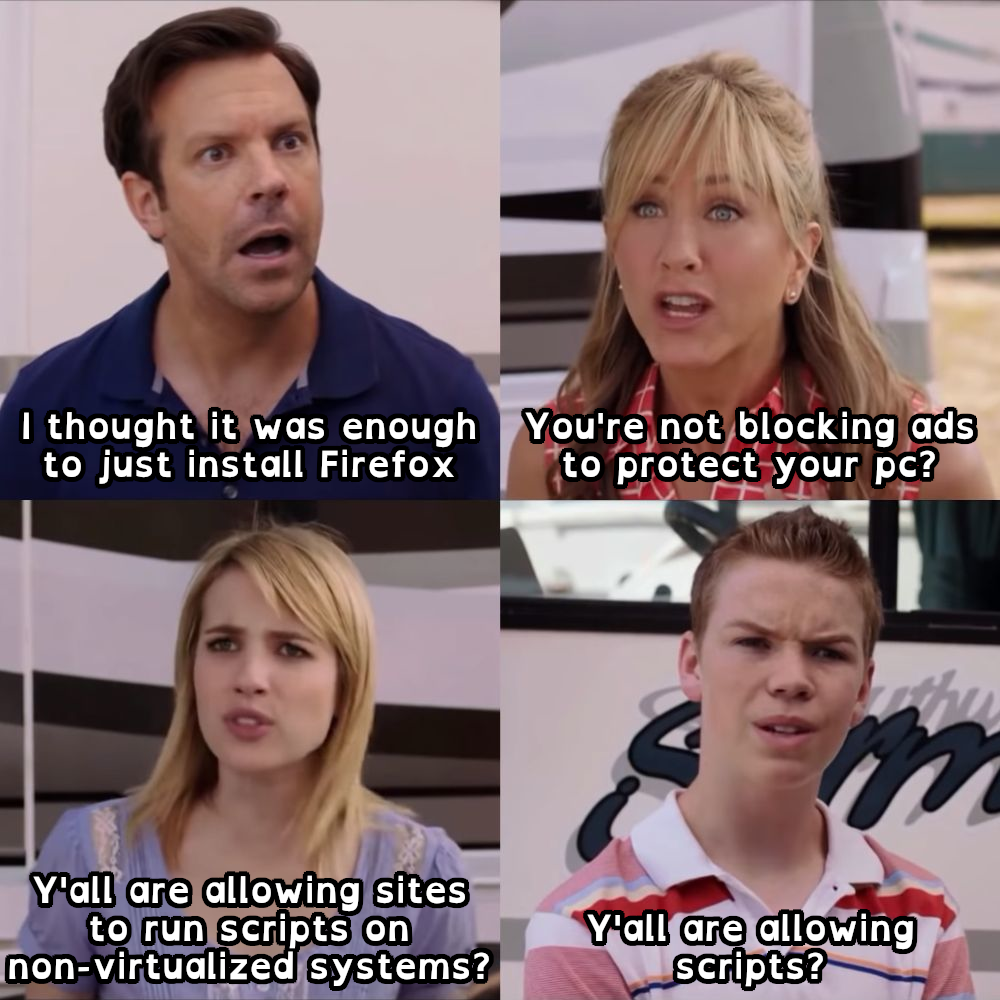
Just to be clear, the JavaScript in my sites is used to improve load times and functionality, not for tracking or other stuff. It has been a standard for quite some time to not load entire pages again if a user clicks on something or scrolls below visible area, but rather only what’s changing. I can guarantee you the alternative is slower as it has been tested and proven for years and years. I wanted to ask you how are you even using YouTube, but I guess they made non-JS version because they also heavily rely on dynamic content. That means your YouTube page doesn’t just load what you see, it also loads comments and other bloat that you might never need, resulting in larger html itself.
Yes, and I hate that. The alternative gives me a complete page which is accessible with or without an active internet connection. The standard you like is a worse experience for me. Loading complete pages without javascripts is aways a faster and better experience than sites which hide content behind a javascript ‘paywall’. I think I’ll start calling it that from now on, because that’s what it is to me, a javascript paywall.
I don’t use GAFAM serivices. If I want to access content which is controlled by youtube (rare), then I use an invidious instance. If I want comments to load, I load the page with the tag specifying non-javascript mode.