Businesses will adore this. I can guarantee a lot of us will be forced to use these at work, like Teams and CoPilot, as a further mega deal with Microsoft.
…But honestly, I think “home” buyers who don’t really care about PC stuff, aka most people, would pick tablets over this.
Business’s will not adore this. Cloud PCs in M365 or Azure cost money, often as much per year as it would cost to just purchase a pc to begin with.
So do all the Microsoft subscriptions they already buy, yet they’re extremely popular anyway?
What in the name is the flying spaghetti monster is Windows 365? An even less private version of windows that won’t work is you don’t have internet?
The OS is fully running on the cloud. You will be given a VM. Everything stays there. You may have to take permission to download a file from the VM onto your local device. You don’t get any choice about telemetry.
Am I interpreting this wrong, or do the specs look like absolute crap? I would expect a thin client would need hardware this good:
2 vCPU
4 GB RAM
64 GB Storage
I’m so sick of Microsoft I actually installed Fedora KDE Plasma.
Genuinely, it’s nicer than windows lol
The occasional forum crawling is a bit annoying, but overall it works really well, has more features and looks slick.
Ain’t ever going back.
The occasional forum crawling is a bit annoying
I was on windows since 3.1, dual booted various distros of Linux the past 15 years, and removed windows from my computers over a year ago.
I would have to crawl forums to find fixes for stupid shit in windows once in awhile, less than Linux 15 years ago, but more than Linux in the lead up to getting rid of it. The thing that really pissed me off was the most egregious issues with win10/11 that id be looking for solutions to would always be changed back on the next update.
I’m really worried about this, I don’t think it’ll become a universal standard by all means but I can see Microslop forcing this onto people as a kinda next step from all the hardware limitation bs.
They would finally have total control over your OS.
Especially for businesses. At work you’ll have no choice but to use something like this.
They’ve been pushing the thin client for years and it’s never taken off. You and I wouldn’t be the target for this machine and neither would gamers or content creators. This is for business or grandparents.
It’s never taken off because of relatively inexpensive and abundant hardware. But these will be attractive to people who need something now and want something inexpensive.
Grandparents are the immediate target but eventually if they force the hardware supply shortages soon some people will need something.
Imagine students with low budget.
The next 5 years are going to be really interesting.
Grandparents don’t want to rent shit. They want to buy it and be done. Source: this old fuck right here.
Fair. But what if they completely eliminate the ability to buy hardware? like only selling to the AI fucks? Do grandparents not get phone plans for example?
Ah yes, it’s around the time for thin clients of this cycle.
Buy all the ram, inflating prices. Sell thin clients and access to computing power/ram. What a scam.
It’s funny because we switched from thin clients to fat clients some 30-40 years back.
You’ll own nothing and be happy.
I see this going nowhere
For a few hundred bucks I have a mini PC with which I can do anything I want
This thing, even at half price, would only allow office365, with monthly payments.
Who the fuck would want that and not just spend a few bucks more and have an actual computer?
you are missing the point that no one wants 365 since we have liberoffice, onlyoffice etc
It is a Thinnet client. They have been around for at least 26 years.
Walk into any office or business that runs off the cloud or a local server and they will likely have dozens… I mean dozens of these lying around.
I know the gaming community looks at these like a vampire looks at a rosary but it isn’t new tech or even a new concept.
Back 25 years ago the company I worked for was looking into changing the computers for thin clients, then powered by JAVA, aaand of course dynamic workplaces that gets reinvented every seven years or so.
In the end they decided not to because people wanted to feel that they had their desk with their computer and not a floating office limbo as daily reminder that they are replaceable labour.
But most of all, their stationary computer had a CD ROM so they could listen to their own music while working and the thin clients couldn’t even customise your wallpaper.
The only real case I can think of where people like thin clients is when they move between stations. I worked at a hospital that used them and it was a fantastic solution. A doctor/nurse/whatever could walk up to any station, beep their ID, and a couple second later their session would load up. It was a huge pain in the ass to build and maintain though. These new devices might actually have a benefit there. Managing W365 through Azure/Intune is leagues easier than managing Citrix with Windows VM pools.
Goodbye local Windows, you mean. Except I said goodbye two years ago and never looked back or missed it. Windows does nothing I need, and does it poorly.
Don’t get me wrong, I’m still petty enough to hope this effort is a miserable failure, but ultimately I don’t care all that much.
Assuming the bootloader is not super locked down or even nonexistent, think Wyse thin client levels of locked down.
I’m still petty enough to hope this effort is a miserable failure
I hope this is effort is a miserable failure … because if it catches on, it could spell the end of desktop PCs in general as a consumer product.
Desktops will always exist, because you need the local processing power (and the cooling to support it) for certain professional workloads. But if everyday computing and even gaming becomes mostly done on thin clients fully dependent on internet servers, then desktops will become more and more of a niche, professional product. Which means they’ll become more expensive and harder to get. Replacement parts will become more expensive and harder to get. A desktop PC will be an expensive industrial machine, hard to justify the upfront price of for an average consumer. (Especially when a cheap thin client with a “cheap” monthly subscription can do essentially all the same things.)
It may also slow the adoption of open-source software because these thin clients are likely to be locked down and not able to install any other software without putting up a fight, if it ends up being possible at all. And if most people get used to the paradigm of renting their computing power from the cloud, they’ll be resistant to change that and go back to locally run software on their local machine that they then have to buy because their old thin client hardware can barely run anything, even if you do manage to install other software on it. (Imagine how hard it will be to convince someone to install Linux instead of using Windows if the first step of installing Linux is that they have to replace all their hardware with much bigger and more expensive hardware…)
(Especially when a cheap thin client with a “cheap” monthly subscription can do essentially all the same things.)
Right now, one year of Microsoft 365 costs a full hundred dollars… and there is still a strong desktop market.
If you’re right that the tech industry is willing to price consumers out of personal computers - and it looks like they are - I can only imagine what will happen to those subscription prices.
If you think about it: It is very wasteful for all of us to have local computation power at home. So many wasted resources as most people use their PCs only the fraction of the time. Same can be said for cars and many other appliances.
Maybe the solution are shared cloud resources, but obviously not owned by those big corporations, but owned by the people on a local, regional, national level?
now that you say this, it is also so wasteful for all of us to leave our homes empty while we go to work! we need to illegalize homeownership, and we need to require all landlords to host multiple families in their properties! It’s not only the empty space, the empty beds and toilet, but also the fridges that keep consuming power, even though nobody is actively using them!
Goodbye local Windows with Linux having a 3% market share means entirely different market & society too, regardless of our Linux desktops that can’t get new parts.
I’ll just point out that 3% market share is still bigger than the entire market when started building PCs. And that’s assuming they can make this attractive to anyone. Single point of failure for your entire company? Single supplier who has you over a barrel when they want to raise prices? Who in their right mind would go for that.
We’ll see. The fact that it’s on offer doesn’t mean people will bite. I’ve seen the industry try so much stupid shit that people said no to. Free computer full of ads? No. Scan cat? No. Packing LEDs into things that don’t need to light up or be hotter? Well… they got us there.
Free computer full of ads? No.
people are paying for that nowadays. they call them smartphones. even the operating system and base apps show ads.
Yes, good points, but what can make financial sense doesn’t need to make economical sense.
Perhaps in such events we can transition to smaller, maybe RISK-V boards with components from various manufacturers.
But yes, I too keep hoping consumers would speak up & stop bs practices. Then again, if we kill a consumer industry you can’t just bring it back in a year, and megacorps can weather in the meantime by offering consumers short-term incentives if they make the switch. It’s how all the personal data collection by private corps started, why eg Google had free services (and no ads) & yet was already being valued in the billions.
Well, when the AI market crashes they will have lots of unused datacenters… Guess they found an use for that after all.
Google calls it a Chromebox.
And in the 80’s we called them X Terminals.
Is it like xorg, or why X?
Yes, they were running X11
Fuck you MS
Yes, terrible disease.
I feel bad for the poor bastards that will certainly have these forced on them at the office or at school.
Apparently my job will be getting rid of our personal local network drives (we each have our own only we can connect to) and moving that to Microsoft one drive. Our IT guy hates the new changes, but the orders come from way above. Not sure how well it will work…
We use onedrive at work… everything goes onto onedrive, and then daily we have people bitching that onedrive has deleted their files.

Back in 2008-2009 I shared this crazy idea with my peers that Microsoft was moving towards an “always connected” OS that would probably be hosted on their servers, because you can make more money charging someone for access to their data than charging them once for their OS.
they laughed it off and told me that nobody would fall for that.
…who’s laughing now assholes?
It was never crazy and people were predicting this since the 90s. It’s essentially a return to the dumb terminal & mainframe paradigm that was in use prior to desktop pcs.
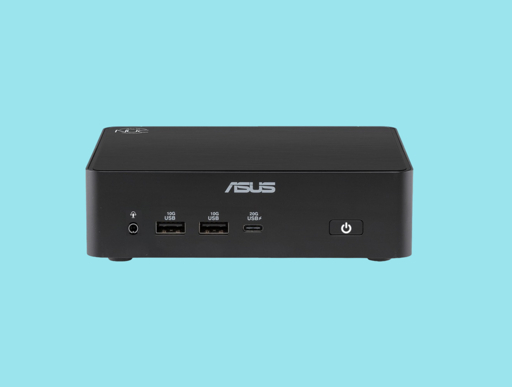
Unlike Dell, Asus did mention a few more details - the system will pack DDR5 memory, HDMI, USB-A, USB-C, WiFi 6E, Bluetooth 5.3, and 2.5G Ethernet. Exact details regarding the USB and HDMI port were not offered, however.
Isn’t the amount of memory kind of a tiny bit more important than which generation it is?
No, no. You misunderstood. You have a “memory” of a thing called DDR5, which you used to be able to afford and purchase. You are supposed to bring that memory with you to reminisce fondly while using this piece of junk Dell is trying to sell you.
Having memories of having memory?