

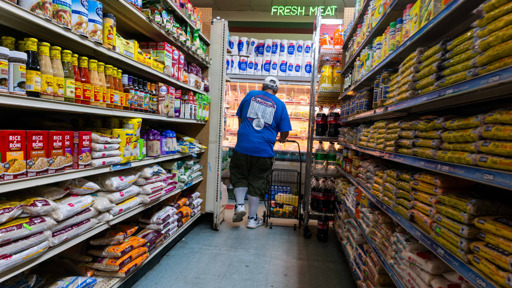
The U.S. grocery slowdown is becoming harder to ignore.
Shoppers are buying fewer items than a year ago, and grocery sales are declining as weakening unit sales are now outweighing rising prices. That is according to new analysis from Bain & Company using NielsenIQ grocery data shared exclusively with CNBC.
Grocery units, which refer to individual items or products sold, fell 1.8% in June from a year earlier, a sharp reversal from the 0.1% year-over-year growth recorded in June 2025. While prices continue to rise about 2% to 3% year-over-year, that inflation cushion for the industry is no longer enough to keep overall sales growing.
DJIA is not an economic indicator. The index highlights half of the relation between Industrials and Transports (DJTA). The S&P 500 is closer to an economic indicator but still not really. The Dow is usually referenced as a distraction from real indicators like the Capitalization to GDP ratio (aka Buffett Indicator). If one looks at the real indicators, we’ve been in some real economy ending doom for quite a while now.
But Pam Bondi said that all that matters is that the Dow is at 50k, not these Epstein files!