

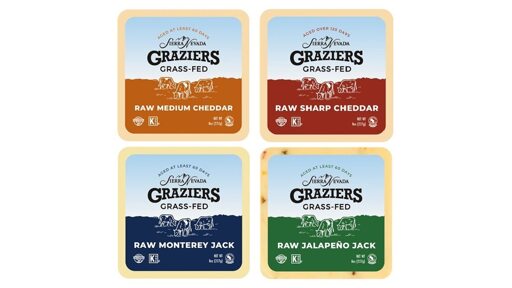
The U.S. Food and Drug Administration and Centers for Disease Control and Prevention said they are investigating a multistate outbreak of E. coli infections potentially linked to Sierra Nevada Graziers raw milk cheese.
Thirteen people in nine states have been sickened in the E. coli outbreak, including eight who were hospitalized and three who developed hemolytic uremic syndrome, a potentially serious complication of E. coli infection that presents with bloody diarrhea and fever, according to the CDC. No deaths have been reported, the FDA said.
States with E. coli cases linked to raw milk cheese include California, Colorado, Georgia, Kentucky, Michigan, Nevada, Oregon, Tennessee and Utah.
Cheese as a method to make milk safe to consume predates pasteurization. It’s not the same risk profile as unpasteurized milk.
There’s a solid chance you’ve eaten cheese make with unpasteurized milk and not known it. As far as I’m aware, there aren’t labeling requirements around it in the US or Europe. Whether or not that’s sensible, I don’t know, but it might give you a better idea of how dangerous governments think this cheese is.
I don’t know if it’s required (I would guess it is) but in France at least cheese is labelled depending on whether it was made from raw or pasteurised/cooked milk (fromage à pâte ‘crue’ or ‘cuite’ respectively). Many of the most common cheeses (eg camembert) are made from raw milk and people aren’t getting sick all the time, but pregnant people are recommended not to eat those.
In the US, if I’m remembering right, women are just advised to avoid soft cheeses in general. Along with deli meats, and a bunch of other things. Although in the US you can’t have raw milk soft cheeses to begin with.
There are definitely people for whom the cheesemaking process alone is an insufficient safeguard. But for the general public it’s not something that super matters.