Propaganda can have multiple purposes. It also drove a wedge between the far left and the center left. The same goes for the Nazis attacking LGBT people (sound familiar)?
It also drove a wedge between the far left and the center left.
No it didn’t. The people the Nazis were making deals with were squarely on the right of the German political spectrum. We’re talking monarchists, rightwing nationalists and the like. A good proxy for this would be seeing which parties voted for the Enabling Act of 1933, and as you’ll notice immediately if you’re familiar with German politics from this period they’re all rightwing. Hell, most of them weren’t even republican. The center left here was the SPD, and they all (the ones that made it to the Reichstag anyway) voted no, while the communists were too busy suffering state repression. Importantly, the wedge that was driven between these two parties was driven by themselves.
With the KPD effectively banned and the SPD violently suppressed, 1933 was in no way a fair election. I can’t say that it represents anything about how those parties related to one another. There had been no clear parliamentary majority for the past 3 years, so it was clear to everyone that a coalition was needed.
The Christian Center Party as a potential ally was certainly hampered by the Nazi rhetoric of LGBT people as “degenerate” and a threat to the birthrate.


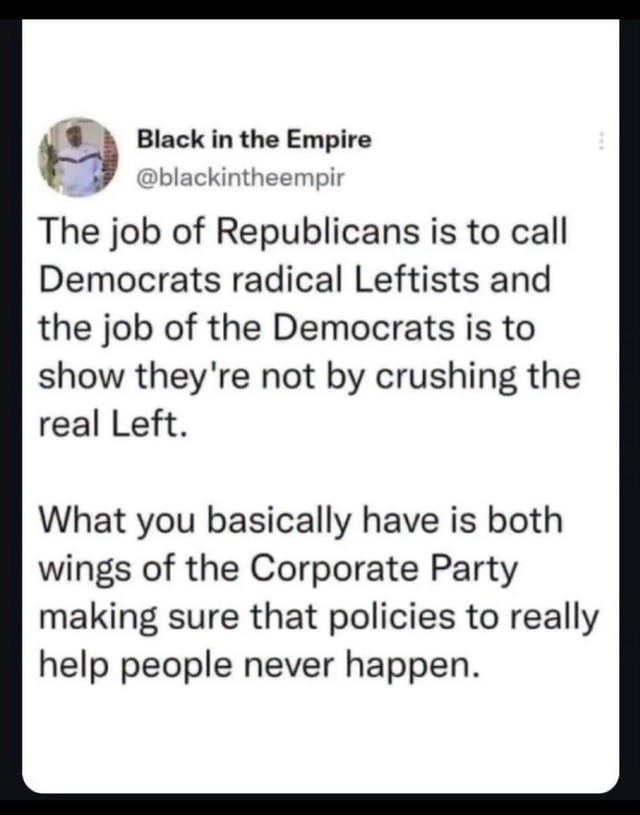
Propaganda can have multiple purposes. It also drove a wedge between the far left and the center left. The same goes for the Nazis attacking LGBT people (sound familiar)?
No it didn’t. The people the Nazis were making deals with were squarely on the right of the German political spectrum. We’re talking monarchists, rightwing nationalists and the like. A good proxy for this would be seeing which parties voted for the Enabling Act of 1933, and as you’ll notice immediately if you’re familiar with German politics from this period they’re all rightwing. Hell, most of them weren’t even republican. The center left here was the SPD, and they all (the ones that made it to the Reichstag anyway) voted no, while the communists were too busy suffering state repression. Importantly, the wedge that was driven between these two parties was driven by themselves.
With the KPD effectively banned and the SPD violently suppressed, 1933 was in no way a fair election. I can’t say that it represents anything about how those parties related to one another. There had been no clear parliamentary majority for the past 3 years, so it was clear to everyone that a coalition was needed.
The Christian Center Party as a potential ally was certainly hampered by the Nazi rhetoric of LGBT people as “degenerate” and a threat to the birthrate.