Well, the data we do have is that the flight was just under 30 minutes and very likely under 100 miles.
From the Wikipedia on airline fuel efficiency:
The worst-performing flights are short trips of from 500 to 1500 kilometers because the fuel used for takeoff is relatively large compared to the amount expended in the cruise segment, and because less fuel-efficient regional jets are typically used on shorter flights.
In the example values table, the most efficient plane for a 560km trip burns 0.92 kg of fuel per km, so doing some rough math and assuming the electric plane travelled 100 miles, that would be roughly 148kg of fuel, or 50 gallons (190L).
At current jet fuel prices ( $3.76/gallon ) that’s about $188 US in jet fuel as a rough estimate. It’s unclear if the test flight went up to full altitude or if the plane was at full weight, so a fair comparison might have used even half as much jet fuel.
Edit: From some of the other comments, it seems like they might have only considered flight time as cruising time, not takeoff and landing, so my numbers will be quite far off if that’s the case. My gut feeling is that this is probably the case, because this seems like too big a difference otherwise.
Jets are less efficient because they’re designed to carry large amounts of cargo and/or passengers. This plane was at near max weight, 25,000 pounds, with zero cargo or passengers
The entire thing had to be stripped down. Single pilot op because they didn’t have the capacity for a 2nd seat and pilot
All this “jet” can do is transport its own batteries short distances, slower than a Cessna 150, and very low altitudes
27 minutes of slow flight in a 150 at high density altitude, well leaned out, would cost about the same and have the ability to carry a passenger
This plane is nothing more than a marketing ploy. At least it’s quite effective at that
Now that you mention it, they specify a maximum total weight of 25,000 lbs, so at 100% efficiency it would take 339MJ of energy to lift the fully loaded plane to 10,000 ft. That can be converted as 94 kWh, and at the current cheapest electricity price in the US of $0.1235/kWh, that’s $11.63
Therefore, it is literally impossible for this plane to reach 10,000 ft for $5 fully loaded.
To be clear, this is the theoretical minimum amount of energy to lift a mass straight up. I’d be surprised if an airplane moving sideways would hit even 30% efficiency in comparison.


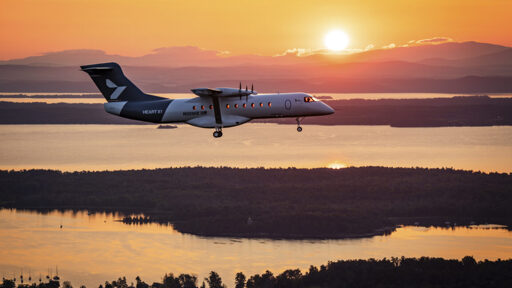
Well, the data we do have is that the flight was just under 30 minutes and very likely under 100 miles.
From the Wikipedia on airline fuel efficiency:
In the example values table, the most efficient plane for a 560km trip burns 0.92 kg of fuel per km, so doing some rough math and assuming the electric plane travelled 100 miles, that would be roughly 148kg of fuel, or 50 gallons (190L).
At current jet fuel prices ( $3.76/gallon ) that’s about $188 US in jet fuel as a rough estimate. It’s unclear if the test flight went up to full altitude or if the plane was at full weight, so a fair comparison might have used even half as much jet fuel.
Edit: From some of the other comments, it seems like they might have only considered flight time as cruising time, not takeoff and landing, so my numbers will be quite far off if that’s the case. My gut feeling is that this is probably the case, because this seems like too big a difference otherwise.
Jets are less efficient because they’re designed to carry large amounts of cargo and/or passengers. This plane was at near max weight, 25,000 pounds, with zero cargo or passengers
The entire thing had to be stripped down. Single pilot op because they didn’t have the capacity for a 2nd seat and pilot
All this “jet” can do is transport its own batteries short distances, slower than a Cessna 150, and very low altitudes
27 minutes of slow flight in a 150 at high density altitude, well leaned out, would cost about the same and have the ability to carry a passenger
This plane is nothing more than a marketing ploy. At least it’s quite effective at that
$5 of electricity to lift an airplane 10,000 feet definitely seems low.
If you want to be really smug, you could say a gas powered plane requires $0 of fuel to glide for 30 minutes
The plane only went 100 AGL. It has a service ceiling of 2,000 feet AGL
This plane has massive wings, making it incredibly good at gliding (for its massive weight)
As far as I can tell from public information, they climbed to 1,100 and glided the rest of the time to land
Now that you mention it, they specify a maximum total weight of 25,000 lbs, so at 100% efficiency it would take 339MJ of energy to lift the fully loaded plane to 10,000 ft. That can be converted as 94 kWh, and at the current cheapest electricity price in the US of $0.1235/kWh, that’s $11.63
Therefore, it is literally impossible for this plane to reach 10,000 ft for $5 fully loaded.
Way cheaper than I’d have guessed.
737 at max takeoff weight is 175k lbs. So that’s around $80 to get airborne. Seems like a steal when you’re charging easily triple that for one seat.
To be clear, this is the theoretical minimum amount of energy to lift a mass straight up. I’d be surprised if an airplane moving sideways would hit even 30% efficiency in comparison.
That’s good enough to get from Britain to Ireland