The article seemed to claim that some models allow outsiders to submit text for detection if I read it right. That seems like a decent way of doing it. If you “open source” the raw data, it means people can do things to try and get around it - same reason most websites don’t reveal their anti-spam techniques.
That’s still not very useful unless the test is for all AI models otherwise you have to manually submit the text to every AI companies detection system.
I see an opportunity for an AI test aggregator company that checks all of them for you at once.
Yeah, but you’ll have to submit to every known provider and hope the user used one of the ones that provide this checking service, and didn’t do something like ask a local model to just randomize synonyms in a text.


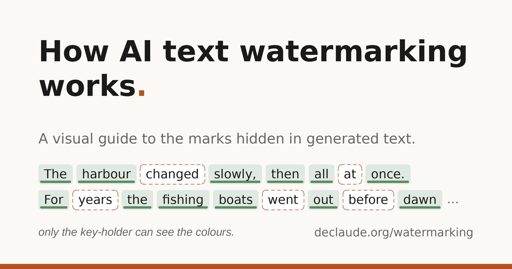
The article seemed to claim that some models allow outsiders to submit text for detection if I read it right. That seems like a decent way of doing it. If you “open source” the raw data, it means people can do things to try and get around it - same reason most websites don’t reveal their anti-spam techniques.
That’s still not very useful unless the test is for all AI models otherwise you have to manually submit the text to every AI companies detection system.
I see an opportunity for an AI test aggregator company that checks all of them for you at once.
Vibe-coding one seems more appropriate to me ;-)
Yeah, but you’ll have to submit to every known provider and hope the user used one of the ones that provide this checking service, and didn’t do something like ask a local model to just randomize synonyms in a text.