

cross-posted from: https://mander.xyz/post/54214582
The Australian government says it has raised concerns directly with China over the country’s new ethnic unity law.
Under a clause in the law, people outside of China can be held legally accountable for undermining “ethnic unity and progress or inciting ethnic separatism”.
The European Parliament has called for the law, which is due to come into effect next week, to be repealed.
…
The Australian government says it has raised concerns directly with China over the country’s new ethnic unity law, which allows Beijing to target people overseas.
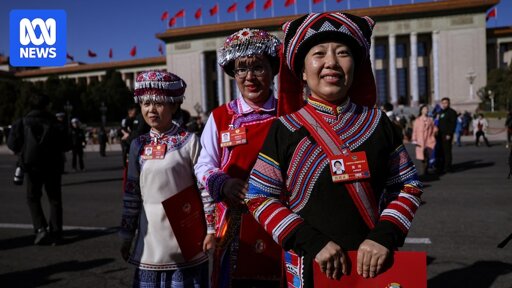
China’s Ethnic Unity and Progress Promotion law, which comes into effect next week, is designed to create a “shared” national identity among the country’s 55 ethnic minority groups, including Tibetans and Uyghurs.
It formalises longstanding policies to promote Mandarin as the language of education, official business and public space while criminalising “violent terrorist activities, ethnic separatist activities, or religious extremist activities”.
But it also includes a clause that people and groups beyond the borders of the People’s Republic of China can be held legally accountable for undermining “ethnic unity and progress or inciting ethnic separatism”.
…
“The Australian government is concerned about the human rights implications of China’s Ethnic Unity Law, including its potential to curtail the rights and freedoms of individuals beyond China’s borders,” a spokesperson [for Australia’s Department of Foreign Affairs and Trade] said.
“All people in Australia, regardless of citizenship, are protected by Australian law and enjoy Australian political freedoms.”
…
The Australia Tibet Council said the law could impact Australian citizens and called on Foreign Minister Penny Wong to “take action”.
“For Tibetans, this law represents a significant escalation of policies that seek to erase Tibetan identity,” the council said.
“This law could be used to target people and organisations outside China, raising serious concerns about transnational repression and the safety of Tibetan-Australians.”
…
[China’s ethnic unity law] has also sparked alarm in Taiwan that the ethnic unity law could give Beijing another legal basis to go after Taiwanese it views as separatists.
The European Parliament has called on the Chinese government to repeal the law, which was passed in March, warning its enforcement would lead to “serious consequences” for EU-China relations, as well as for populations originating from Tibet, Xinjiang and Inner Mongolia.
“Parliament condemns this law for encouraging assimilation policies and restricting cultural, religious, and linguistic freedoms, in contradiction with China’s obligations under international law,” the parliament said in a statement.
…
Similarly, eight United Nations human rights experts raised concerns about the new law in a letter (opens pdf) to the Chinese government in April.
“We would like to draw attention to risks that the law on Promoting Ethnic Unity and Progress could entrench a uniform approach to ethnic relations across all regions of China, thereby potentially amplifying restrictions on minority rights,” it said.
…