(most, maybe even nearly all, people have or can have a way to charge at home)
What? Most people where?
I live in a fairly rich European country, and EV chargers here practically don’t exist. Almost everyone lives in apartment buildings. If you’re lucky, yours will have 1 or 2 chargers in the underground parking lot or somewhere close by outside.
It’s even worse in Eastern and Southern Europe. Outside of North America, Europe, and China, EVs, as well as chargers for them, don’t exist at all.
Are those ‘most people’ you’re talking about actually just <5% of human population that happen to live in North America or Western Europe, and happen to be wealthy enough to afford that?
EV chargers need not be some special thing. Level 1 charging is more than sufficient for the vast majority of people. Can you find a regular outlet near where you park? Maybe with the help of an extension cord? Or maybe your complex could put outlets in.
Arguably, EVs work even better for places that don’t have infrastructure. Which is easier? Building a network of fuel stations (which need electricity) and keeping them supplied or putting in solar panels in people’s villages? I’d argue the second is generally easier now and is overall better for society - electricity comes with so many benefits beyond just being able to charge your car.
Then there’s upcoming EVs, like what Aptera is working on. Those will be able to add significant amounts of range each day using just the solar panels on the roof. Now you’ve got a car that needs no infrastructure at all (but can use it, if it exists).
I really don’t think charging EVs from regular outlets is at all realistic for the vast majority of people.
Unless you live on the ground floor, you’d have to drag a long ass cable through one of your windows. One of my neighbours actually does that, but just imagine everybody doing it. Not to mention the grid would most likely be unable to handle the load.
I’ve never seen public outlets, aside from USB ports in public transport, so I doubt it’s a thing.
Honestly sounds like a reasonable idea, and not just for EVs. The problem is that more and more countries are steadily moving away from public goods, so every building/complex would have to organize it individually.
Arguably, EVs work even better for places that don’t have infrastructure. Which is easier? Building a network of fuel stations (which need electricity) and keeping them supplied or putting in solar panels in people’s villages?
Absolutely, agreed. But keep in mind the fuel stations are already there, because most countries spent the last 150 years building them everywhere.
It’s an unfair comparison, of course, but it’s also impossible to make a fair one. As it stands, pretty much all developed and a lot of developing countries are already well connected when it comes to gas stations. It’s a lot cheaper and easier to keep them going, than it’d be to replace them all with EV equivalents.
Then there’s the question: does it really make sense to spend the next 50 years upgrading all that infrastructure? When, at least in Europe, public transport is already present everywhere and well developed?
Would it not be a whole lot easier and cheaper to just get rid of fuel stations, and keep expanding public transport, which emits dozens of times less CO2 per passenger than cars do?
Now, obviously, there are still uses for personal vehicles, even if public transport is great. It’s not a question which one to focus on exclusively, but which one to propritize.
Those will be able to add significant amounts of range each day using just the solar panels on the roof.
If this can be done well, then yeah, infrastructure problem kind of solved. Then you’d just need to wait for people to upgrade their existing cars, and afterwards all that gas infrastructure is basically redundant.


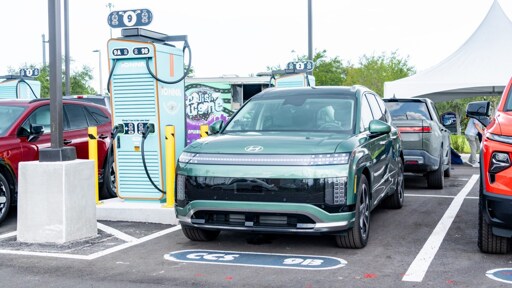
What? Most people where?
I live in a fairly rich European country, and EV chargers here practically don’t exist. Almost everyone lives in apartment buildings. If you’re lucky, yours will have 1 or 2 chargers in the underground parking lot or somewhere close by outside.
It’s even worse in Eastern and Southern Europe. Outside of North America, Europe, and China, EVs, as well as chargers for them, don’t exist at all.
Are those ‘most people’ you’re talking about actually just <5% of human population that happen to live in North America or Western Europe, and happen to be wealthy enough to afford that?
EV chargers need not be some special thing. Level 1 charging is more than sufficient for the vast majority of people. Can you find a regular outlet near where you park? Maybe with the help of an extension cord? Or maybe your complex could put outlets in.
Arguably, EVs work even better for places that don’t have infrastructure. Which is easier? Building a network of fuel stations (which need electricity) and keeping them supplied or putting in solar panels in people’s villages? I’d argue the second is generally easier now and is overall better for society - electricity comes with so many benefits beyond just being able to charge your car.
Then there’s upcoming EVs, like what Aptera is working on. Those will be able to add significant amounts of range each day using just the solar panels on the roof. Now you’ve got a car that needs no infrastructure at all (but can use it, if it exists).
I really don’t think charging EVs from regular outlets is at all realistic for the vast majority of people.
Unless you live on the ground floor, you’d have to drag a long ass cable through one of your windows. One of my neighbours actually does that, but just imagine everybody doing it. Not to mention the grid would most likely be unable to handle the load.
I’ve never seen public outlets, aside from USB ports in public transport, so I doubt it’s a thing.
Honestly sounds like a reasonable idea, and not just for EVs. The problem is that more and more countries are steadily moving away from public goods, so every building/complex would have to organize it individually.
Absolutely, agreed. But keep in mind the fuel stations are already there, because most countries spent the last 150 years building them everywhere.
It’s an unfair comparison, of course, but it’s also impossible to make a fair one. As it stands, pretty much all developed and a lot of developing countries are already well connected when it comes to gas stations. It’s a lot cheaper and easier to keep them going, than it’d be to replace them all with EV equivalents.
Then there’s the question: does it really make sense to spend the next 50 years upgrading all that infrastructure? When, at least in Europe, public transport is already present everywhere and well developed?
Would it not be a whole lot easier and cheaper to just get rid of fuel stations, and keep expanding public transport, which emits dozens of times less CO2 per passenger than cars do?
Now, obviously, there are still uses for personal vehicles, even if public transport is great. It’s not a question which one to focus on exclusively, but which one to propritize.
If this can be done well, then yeah, infrastructure problem kind of solved. Then you’d just need to wait for people to upgrade their existing cars, and afterwards all that gas infrastructure is basically redundant.