NASA appears to be pulling its SR-71 Blackbird, the fastest production plane ever made, out of retirement as the Trump administration teases its new line of hypersonic surveillance jets — but doubt…
Seeing Blackbird fly again after all these years would be incredible. I’d love to know what NASA has planned for it.
During the Cold War, it had to overfly Russian airspace to be able to see far enough. They were within their rights to shoot at unauthorized aircraft in their airspace.
However, it could see a lot higher percentage of Iran without overflying, and Iran can’t legally shoot at something in international airspace
Satellites do have such restrictions. While you may expect the angle to be higher than for an aircraft, a satellite will not be directly overhead most of the earth. You’re still limited by angle and shadow, as well as time and frequency. Unless the target is high enough priority to reposition the satellite, it will be an oblique angle at a predictable time. While that angle will on average be higher than an aircraft, the aircraft can find different angles, at different times, with as much frequency as you like.
Perhaps some things are more visible to an aircraft from the east than a satellite from the north, or perhaps the target has camouflage procedures at the known satellite schedule but an aircraft is more likely to catch them operating
The biggest issue with satellites is they are on a schedule. The soviets knew the schedule and would move things like trucks around when they knew it wasn’t overhead.
You might like this book: https://en.wikipedia.org/wiki/Deep_Black_(book)
It goes into detail on the keyhole satellite program and such. He says he used publicly available info and so couldn’t be accused of violating classified restrictions.
Any country involved in a shooting war is within their rights to shoot at any object they have reason to believe is a military target, regardless of where that object is.
Outside their airspace, in international waters, inside another country, on the fucking Moon - the limits are technological, not legal.
If the object isn’t a military target, then they aren’t within their rights to shoot at it no matter where it is. Not that that has stopped attacks on civilians in the past (e.g. Russian ballistic missile attacks on apartment blocks, US drone strikes of fishing boats), only that the laws of war forbid such things.
I chuckled the other day when I heard that the planned attack on the UK airbase used by the US for attacks on Iran, is being blamed on Iran, and also being called terrorism.
I don’t think it’s terrorism when it’s a legitimate military target that takes place during war time. While it is possible for terrorism to exist during a war (you know, something like bombing schools, hospitals, residences, etc), an attack on an enemy’s base doesn’t fit.


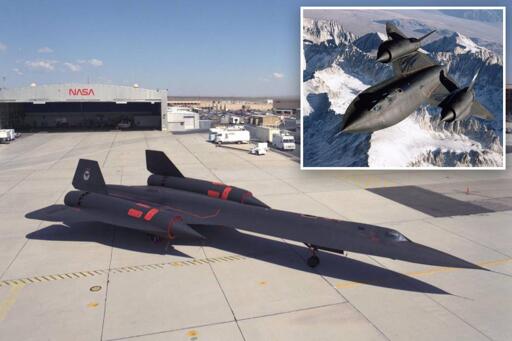
The reason they got rid of surveillance jets is that satellites can do it without any risk to a pilot and on a 24 hr basis.
Perhaps they’ve decided that satellites can’t be relied on. Kessler syndrome contingency?
During the Cold War, it had to overfly Russian airspace to be able to see far enough. They were within their rights to shoot at unauthorized aircraft in their airspace.
However, it could see a lot higher percentage of Iran without overflying, and Iran can’t legally shoot at something in international airspace
You can’t visually see over the horizon and even then you have blocked lines of sight, etc. A satellite has no such restrictions.
Satellites do have such restrictions. While you may expect the angle to be higher than for an aircraft, a satellite will not be directly overhead most of the earth. You’re still limited by angle and shadow, as well as time and frequency. Unless the target is high enough priority to reposition the satellite, it will be an oblique angle at a predictable time. While that angle will on average be higher than an aircraft, the aircraft can find different angles, at different times, with as much frequency as you like.
Perhaps some things are more visible to an aircraft from the east than a satellite from the north, or perhaps the target has camouflage procedures at the known satellite schedule but an aircraft is more likely to catch them operating
The biggest issue with satellites is they are on a schedule. The soviets knew the schedule and would move things like trucks around when they knew it wasn’t overhead.
You might like this book: https://en.wikipedia.org/wiki/Deep_Black_(book) It goes into detail on the keyhole satellite program and such. He says he used publicly available info and so couldn’t be accused of violating classified restrictions.
Thanks. I’ll take a look for it. Not listed as an e-book at my library so I might have to look for a physical copy
Blackbird didn’t overly the USSR. The U2 did, and they learned the hard way that Soviet missiles went a lot higher than anyone thought.
Good point - I’m probably remembering fiction, but also Soviet Union attempting to target the aircraft
…. And we have the incidents of overflying Swedish airspace, and I think Danish
International airspace isn’t out of bounds when there’s an active conflict going on.
Any country involved in a shooting war is within their rights to shoot at any object they have reason to believe is a military target, regardless of where that object is.
Outside their airspace, in international waters, inside another country, on the fucking Moon - the limits are technological, not legal.
If the object isn’t a military target, then they aren’t within their rights to shoot at it no matter where it is. Not that that has stopped attacks on civilians in the past (e.g. Russian ballistic missile attacks on apartment blocks, US drone strikes of fishing boats), only that the laws of war forbid such things.
Didn’t you hear? The war is over. We “won”…… TACO sez, “ I didn’t say it, I declared it”
I chuckled the other day when I heard that the planned attack on the UK airbase used by the US for attacks on Iran, is being blamed on Iran, and also being called terrorism.
I don’t think it’s terrorism when it’s a legitimate military target that takes place during war time. While it is possible for terrorism to exist during a war (you know, something like bombing schools, hospitals, residences, etc), an attack on an enemy’s base doesn’t fit.
All the Arab countries condemning Iran for attacking US bases and US military personnel conducting the war on Iran from their land is just as comical.
Terrorism is, by definition, by a non state actor. If a government does it, it’s just a war crime.